
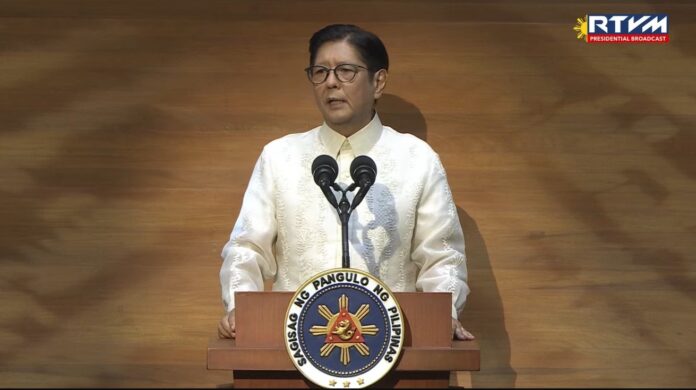
The Cebu Chamber of Commerce and Industry (CCCI) welcomed key economic initiatives outlined by President Ferdinand Marcos Jr. in his fifth State of the Nation Address (SONA), saying the government’s focus on governance, energy security, infrastructure, and business competitiveness could strengthen investor confidence and support long-term economic growth if effectively implemented.
In a statement issued after the President’s address, the chamber said stronger governance and anti-corruption efforts, particularly the administration’s investigation into alleged irregularities in flood control projects, send an important signal on transparency and accountability.
The chamber noted the reported recovery, freezing or preservation of about P25 billion in public funds, which the government said would be redirected to education, food security, and healthcare.
“For the private sector, greater transparency and accountability in government processes are essential in building investor confidence and ensuring a more predictable business environment,” the chamber said.
The business group also welcomed the administration’s plans to strengthen the country’s energy security, citing efforts to develop nearly 10,000 megawatts (MW) of power capacity from around 200 energy projects through 2028, expand more than 1,700 MW of energy storage, extend the Malampaya gas project, and promote renewable energy, hydrogen, and possible nuclear power development.
It said reliable and competitively priced electricity remains critical for Cebu’s manufacturing, tourism, information technology and other major industries.
The chamber also expressed support for the proposed “Sariling Kuryente” Act, which seeks to encourage households to install solar panels and battery storage systems, saying the measure could improve energy resilience while accelerating the country’s shift toward a more diversified energy mix.
On business competitiveness, the chamber welcomed tax relief measures for the middle class and initiatives to ease compliance requirements for businesses, including the Bureau of Internal Revenue’s one-time tax abatement program for micro-entrepreneurs.
It said the measures could improve cash flow, encourage more businesses to formalize their operations and free up resources for expansion and job creation.
The group also cited the government’s continued pursuit of free trade agreements and the facilitation of more than P6 trillion in investments through the Green Lanes initiative as positive developments that could improve the country’s investment climate and help Philippine businesses expand into regional and global markets.
The chamber said reforms to accelerate infrastructure development, including improvements to right-of-way acquisition, would help reduce logistics costs and improve connectivity, particularly for economic corridors being developed in Cebu.
It also welcomed proposed amendments to the National Building Code, disaster resilience initiatives such as the Ligtas Pinoy evacuation centers, and reforms promoting waste-to-energy projects as steps toward building safer and more sustainable communities.
The chamber likewise supported the administration’s efforts to prepare workers for emerging industries, noting the government’s target of training 1.8 million Filipinos in artificial intelligence-related skills.
While the proposed Pax Silica Industrial Hub is located within the Luzon Economic Corridor, the chamber said the broader push toward advanced manufacturing and technology-driven industries presents opportunities for Cebu to strengthen its own digital economy.
According to the chamber, the national government’s priorities are aligned with Cebu’s long-term development plans, including the Metro Cebu Economic Hub, the West Cebu Economic Corridor, the Central Cebu Conservation Corridor, the North and South Cebu Tourism Corridors, and the North and South Cebu Agri-Industrial Corridor.
The chamber said it looks forward to working with the government to ensure the announced policies are translated into concrete outcomes, adding that consistent implementation, regulatory stability and continued public-private collaboration will be essential to achieving inclusive and sustainable economic growth.
Cebu Business News

